
















You’ve found a textile, a blanket with a design that feels less like a pattern and more like a piece of art. But when you look closer, you notice the term "Jacquard weave" and a price point that reflects a higher level of craftsmanship. It makes you pause and ask a fundamental question: is a woven design really that different from a printed one?
The answer lies not just in the durability of the fabric, but in the very integrity of the art itself. Understanding the distinction is key to choosing a piece that will not only last but will also bring a deeper sense of quality and story into your home.
Jacquard-Woven vs Printed Textiles
The simplest way to understand the difference is to think about how the design becomes part of the fabric. With a surface print, the design is applied on top of a finished piece of cloth, much like ink on paper. With a Jacquard weave, the design is created by interlacing different colored threads together to form the structure of the fabric itself.
1. Surface Print

Printed textiles are produced by applying dye onto an existing piece of cloth using screens or digital printing technology. The design remains on the surface rather than within the fabric structure.
As a result, the reverse side is usually plain or shows a softer, less defined version of the front. Because the color sits externally, printed designs can fade with prolonged exposure to sunlight and may show signs of wear after repeated washing or friction.
2. Jacquard Weave

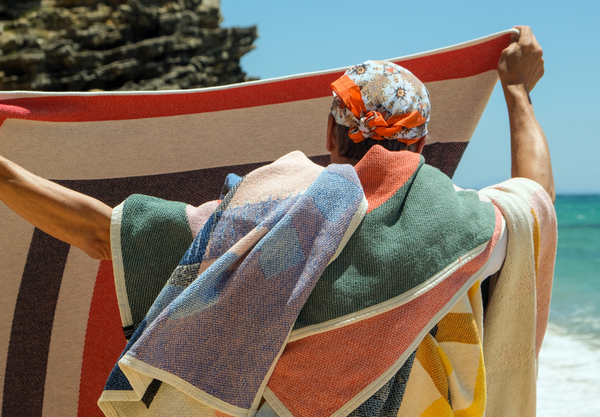
Example of jacquard-woven textile on blanket: Cotton Beach Towel / Mini Blanket “El Pescado” by Florian Schommer
Jacquard-woven textiles are created on specialized looms that interlace individually dyed yarns to form the pattern as the fabric is constructed. The design is not added later but built directly into the textile.
This means the motif exists on both sides, with each side reflecting the woven composition. Because the color and pattern are part of the weave itself, jacquard textiles maintain their visual clarity and integrity even with regular use.
Jacquard Weaving: Preserving Art Through Structural Integrity
The jacquard loom introduced a breakthrough in textile production by allowing individual threads to be controlled independently. This mechanism makes it possible to weave detailed, complex images directly into the fabric.
The design is not applied afterward. It is constructed through the precise interlacing of colored yarns, giving the textile both visual depth and structural permanence.
When an artist collaborates on a woven textile, the artwork is not simply copied. Technicians deconstruct the design and re-engineer it into a digital weave file. This file contains specific instructions for the loom, dictating exactly which colored threads must be raised or lowered at every point to recreate the design.
This method is a meticulous fusion of art and technology, requiring skilled technicians to interpret the artist’s lines, colors, and textures into a woven structure.
Benefits of Jacquard-Woven Textiles
The structural construction of a jacquard weave provides performance advantages that surface printing cannot achieve. Because the design is integrated into the fabric itself, the textile maintains its color, strength, and texture over time.
1. Lasting colors
Jacquard textiles typically use yarn-dyed fibers, where each thread is colored before weaving begins. This allows pigment to penetrate the fiber rather than sitting on the surface.
The result is a deeper, more stable color that resists fading caused by washing and prolonged exposure to light.
2. Enhanced durability
The pattern in a jacquard textile forms part of the fabric’s structure. It cannot crack, peel, or wear away because it is not applied as a separate layer.
The woven construction distributes friction across the material, improving resistance to abrasion and helping the textile retain its appearance with regular use.
3. A richer texture
Jacquard weaving creates subtle variations in surface height through the interlacing of threads. This gives the textile a tactile dimension and visual depth.
The design feels present in the material itself, offering a refined surface quality that a flat print cannot reproduce.
Woven Textiles as Long-Term Objects, Not Seasonal Products
Choosing a woven textile is a decision that aligns with a broader shift away from disposable goods and toward items with permanence. This movement, sometimes called the "heirloom economy," reflects a growing desire for products with longevity, story, and intrinsic value. The global market for handcrafted goods, valued at over $739 billion in 2024, is a clear indicator of this trend.
A printed throw might look good for a season or two, but a woven art blanket is designed to last for decades. It’s an investment in craftsmanship that can be passed down, gathering personal history along the way.
How to Identify a True Jacquard Weave
Once you know what to look for, identifying a Jacquard weave is simple. The most reliable method is to look at the reverse side of the fabric.
- A Woven Fabric: You will see the "negative" or inverse colors of the pattern on the back. The threads are visible, and you can see how the design is constructed.
- A Printed Fabric: The back will typically be a solid, lighter color (usually white or off-white) with no pattern, as the dye was only applied to the front surface.
Choosing Woven Textiles as Functional Art for the Home
When you choose a woven textile, you're choosing more than just a pattern. You're investing in a piece of functional art, crafted with a technique that honors both the artist's vision and the enduring quality of the material.
ZigZagZurich works with contemporary artists to translate original artworks into jacquard-woven textiles. Each design is carefully adapted for the loom so the composition, color relationships, and detail remain intact. The finished piece functions as bedding or a blanket while retaining the visual integrity of the original artwork
If you’re drawn to pieces with a story, we invite you to explore our collection of artist-designed bedding and textiles, where every thread is part of the art.
Common Questions About Woven vs Printed Textiles
Why Jacquard-Woven Textiles Cost More?
The cost reflects the entire process: the use of high-quality, yarn-dyed materials; the complex setup and operation of Jacquard looms; the skilled labor required to translate a design and manage production; and the collaboration with the artist who created the original work.
Do Woven Designs Fade Over Time?
Because the color is inherent to the yarn itself, a Jacquard weave is one of the most colorfast textiles available. With proper care, the colors will remain vibrant for years, far outlasting the lifespan of a printed design.
Is A Woven Blanket As Soft As A Printed One?
Softness is determined by the material, like merino wool or cotton, not the production method. Woven blankets, especially those made from high-quality natural fibers, are known for their exceptional softness and weighty, comforting drape. Our collection of cotton and wool blankets is designed to be as tactile as it is visual.

