















A beautiful design can draw you to a piece of fabric, but its quality determines whether it will last for seasons or for years. For home textiles like curtains and bedding, quality affects everything from durability to the room's appearance.
Understanding how to assess a fabric is about making a wise investment in pieces you live with every day. Studies show that 84% of people are willing to pay more for higher-quality products, and in home textiles, that willingness only makes sense when you know what quality actually looks like.
This guide will walk you through the essential checks that separate well-made textiles from those that quickly lose their appeal.
Understanding Different Types of Fabric
The fibre a fabric is made from determines almost everything else about it. How it breathes, how long it lasts, how it ages with use.
Natural fibers
Natural fibres like linen, cotton, and wool breathe well, regulate temperature and tend to soften with age rather than degrade. Cotton in particular has earned a strong reputation in home textiles.
A survey conducted by the Global Home Textiles Survey found that 79% of consumers rate it as the highest-quality fibre choice, largely because of how well it holds up over repeated washing and long-term use.
Synthetic fibers
Synthetic fibres like polyester, acrylic and nylon are produced through chemical processes and are generally less expensive than natural alternatives. In home textiles, the trade-offs become apparent over time.
They tend to trap heat and moisture, which affects comfort against the skin, and are more susceptible to pilling and surface wear. Many synthetic fabrics lose their initial appearance after relatively few washes.
Why Yarn Quality Matters As Much As Fibre Type
Fibre type is only part of the picture. The length of the individual fibres used to spin the yarn has a significant influence on how the final fabric looks, feels, and wears.
Longer fibers, like those found in long-staple cotton or linen from mature flax, can be spun into smoother, stronger yarns. These yarns create a fabric that is resilient, soft, and resistant to pilling.
Shorter fibers, on the other hand, must be twisted together many times to create a yarn of the same length. This results in a weaker, fuzzier yarn that is more likely to pill and wear out quickly. A fabric made from short fibers will feel less smooth and may shed lint, especially in the first few washes.
How To Test A Fabric's Feel And Density
What you feel when you handle a textile tells you more than the price tag ever will.
1. Check Fabric Weave Quality Using Light
Hold the fabric up to a light source and observe how light passes through it. A tight, even weave distributes light uniformly across the surface.
Patchiness, loose threads, or inconsistent gaps are signs of uneven construction, which can lead to warping, snagging, or distortion over time.
2. Drape and "Hand" Feel
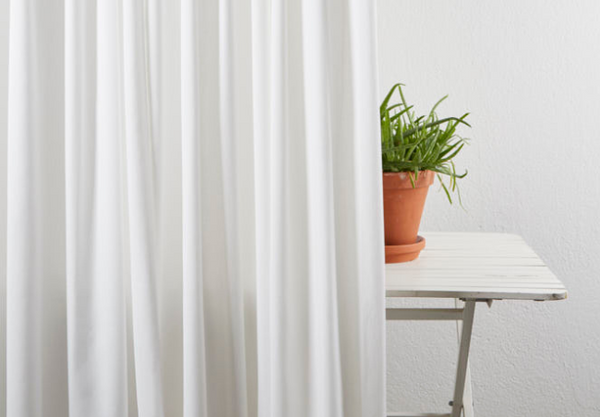
Drape is how a fabric falls under its own weight. A well-made textile flows in soft, rounded folds rather than holding a rigid shape. ZigZagZurich's Italian-woven wool blankets carry that quality naturally, with premium fibres that stay supple and hold their depth over time.
Stiffness, by contrast, is often a sign of chemical finishing applied to compensate for a weak base weave.
3. Examine The Finish And Small Details
The finishing details on a textile reveal how much care went into its production. Look for clean, straight edges, secure seams and consistent colour saturation across the full surface. Uneven tone or fading near the edges can point to shortcuts in the dyeing process.
Finally, trust your sense of smell. A new textile should not have a strong chemical odour. A harsh or synthetic smell often indicates the fabric has been treated with finishing agents used to compensate for poor base construction.
Understand What Labels And Certifications Really Mean
Labels carry useful information, but only if you know what to look for.
Worth checking:
- Fibre content: A clear breakdown of exact composition, such as 100% linen or 90% cotton/10% wool, is a sign of transparency in how a product is made.
- Country of manufacture: Not a guarantee on its own, but countries with a long history of textile production, Italy and Portugal among them, carry a certain standard of craft that tends to show in the finished product.
- Certifications: OEKO-TEX® STANDARD 100 is one of the most reliable trust signals, particularly relevant for the Swiss market. It confirms that every component of the textile has been tested against more than 1,000 harmful substances.
Worth less than you might think:
- High thread counts: A common marketing device, especially in bedding. Thread count is largely meaningless without knowing the yarn quality. A 300-thread-count sheet in long-staple cotton will outperform a 1,000-thread-count sheet made from cheap, multi-ply yarns. What matters is the fineness of the yarn and the density of the weave.
- Vague luxury claims: Terms like "luxury feel" or "premium blend" without specific material information are often used to obscure a lower-quality composition.
How High Quality Fabrics Age Over Time
One of the most rewarding aspects of investing in quality textiles is watching them evolve. Unlike synthetics that often degrade, well-made natural fabrics improve with age.
- Linen softens and becomes more supple with every wash, growing more comfortable the longer it is used.
- High-quality wool holds its shape and resists pilling over years of regular use, remaining remarkably stable over time.
- Long-staple cotton maintains its smooth surface and resists the fuzzing that affects lower-grade alternatives.
Choosing quality means investing in pieces that reward you the longer you keep them.
A Fabric Quality Checklist For Your Next Purchase
Use this as a quick reference when shopping for home textiles.
1. Fibre: Is it made from natural fibres like cotton, linen or wool?
2. Yarn: Does it feel smooth, suggesting long-staple fibres?
3. Weave: Is the weave tight and even when held up to the light?
4. Weight: Does it feel substantial in the hand?
5. Drape: Does it fall naturally without stiffness?
6. Labelling: Is the fibre content clearly stated? Are there certifications like OEKO-TEX®?
7. Longevity: Is it a material known to improve with age?