

















Is your bedroom too bright in the morning? Or is it too dark? Either way, the curtains are usually where the answer starts, and more often than not, it comes down to whether they are lined or not.
Lining changes how a curtain performs without changing how it looks. It affects how much light comes through, how warm the room stays, and how long the fabric lasts. That said, going unlined has its own advantages. For rooms where you want more light and a softer, airier feel, an unlined curtain is often the better fit.
So which one does your room actually need?
What are Lined Curtains?
A lined curtain has a second layer of fabric sewn onto the back of the main panel. The panel hangs with more weight, holds its shape better, and the main fabric lasts longer because it has something between it and the light.
There are three types of lining:
1. Standard Lining
Standard lining adds weight and body to the main fabric without changing how the room feels. Heavier panels hang cleanly with it rather than pulling at the hem, and it works with almost any fabric type.
For curtains you are buying to last, it is the simplest form of protection. It keeps the fabric in better shape over time and improves how the curtain drapes without doing anything dramatic to the room.
2. Thermal Lining
Thermal lining keeps heat from leaving through the glass in winter and reduces how much comes in during summer. The dense fibres also muffle some outside noise, which most people only notice once it is there.
It is heavier than standard lining, so it is worth thinking about when choosing your track and fittings. If warmth is a priority in your home, it is easier to plan for it from the beginning than to revisit it later.
3. Blackout Lining
Blackout lining blocks light almost entirely. It suits bedrooms and media rooms where darkness matters, and it removes the glow around the edges that lighter linings leave behind.
The fit needs to be right for it to work properly. The panel should be wide enough, and the heading should sit close to the wall or ceiling. Done well, it makes a room feel genuinely different after dark.
What are Unlined Curtains?
An unlined curtain is just the fabric on its own, with nothing sewn behind it. That tends to sound like the simpler option, and in many rooms it is the right one.
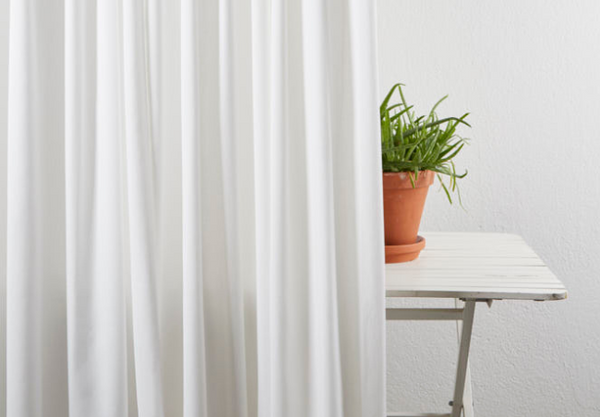
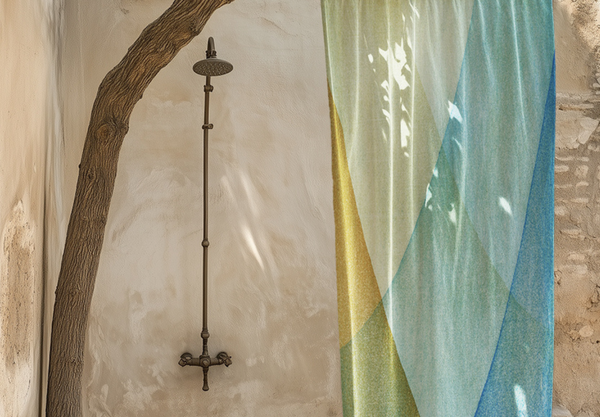
Some fabrics are made to be seen with light coming through them. Linen slubs only show up properly when the light passes through the weave. Loosely woven cottons shift gently when a window is open. A lining behind either of those changes how they look and feel in a way that works against the fabric rather than with it.
The practical limits are worth knowing. Unlined curtains offer less privacy, less warmth, and no protection from sunlight for the fabric over time. Whether any of that matters depends on the room.
When to Choose Lined Curtains
A curtain does more than cover a window when it is lined correctly. These are the three situations where that extra layer genuinely earns its place:
1. Privacy: Once the lights come on inside, even a heavy, unlined fabric lets silhouettes show through. In a bedroom or a room that faces the street, that is not something you want to discover after the curtains are already up. A standard or blackout lining closes that gap properly.
2. Warmth: Single-pane windows in older buildings lose heat quickly, and a single layer of fabric does very little to slow that down. Thermal lining creates a proper barrier between the room and the glass, which shows up most on cold mornings and in rooms that face north.
3. Fabric protection: Direct sunlight fades colour and breaks down fibres gradually, and east, west, and south-facing windows get the most of it. A lining takes that exposure instead of the main fabric, which adds years to how long the curtain holds its colour and shape.
If any of these apply to your room, lining is worth building in from the start rather than reconsidering later.
When to Choose Unlined Curtains
Unlined curtains work best in rooms where light is something you want more of and with fabrics that are meant to be seen through rather than backed up.
1. Light-filled rooms: Living rooms, dining areas, and kitchens are usually spaces where an unlined curtain makes more sense. It softens the light without blocking it, and keeps the room feeling open during the day.
2. Sheer and lightweight fabrics: Voile, fine linen, and loosely woven cotton all look their best with light coming through them. Their texture and natural variation only show up properly that way. A lining behind them covers the very quality that made them worth choosing.
3. Rooms that need to breathe: Unlined fabric moves when there is air in the room. In open-plan spaces or anywhere the curtain is doing a visual job rather than a practical one, that lightness is part of the effect.
If the room is built around natural light and the fabric you are drawn to is one that should be seen through, unlined is usually the right answer.