
















Have you ever noticed small fuzzy balls forming on your favourite blanket or cushion cover after a few washes? That is called pilling, and it doesn’t necessarily happen because of poor care. Fibre type, yarn construction, and finishing method all determine how a textile holds up over time.
Some materials are naturally resistant to surface wear. Others, particularly those made from short, loosely spun fibres, tend to show it quickly.
What is Fabric Pilling, and Why Does It Happen?
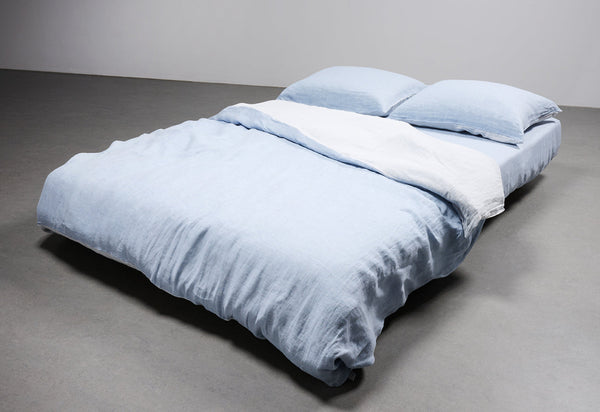
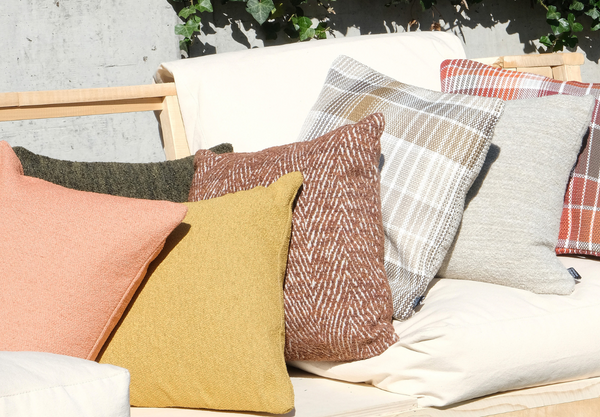
Pilling occurs when loose fibres tangle through repeated friction, forming small knots or balls on the fabric surface. Areas that see the most contact, like the foot of a duvet cover or the seat of a sofa cushion, are usually the first to show it.
But friction isn’t the only reason. How quickly a fabric pills also comes down to fibre length, how the yarn is spun, and the overall fabric structure.
Why Some Fabrics Pill More Than Others
Not all fabrics are created equal when it comes to pilling. The tendency to pill is determined by a few key characteristics in how a textile is made.
1. Short Staple Fibers
One of the main reasons why fabrics pill is because of short fibres. When a yarn is spun from short fibres, the loose ends that sit on the surface are more likely to catch on things and work themselves free. Over time, those freed fibres roll into the small balls we recognise as pilling.
2. Loosely Twisted Yarns
To achieve a softer, fluffier feel, some yarns are spun with a low twist. The trade-off is that loosely spun fibres have less holding them in place, making them more vulnerable to surface wear. Tightly spun yarns keep fibres bound together more securely and tend to hold up better over time.
3. Fabric Blends
Fabrics that blend natural and synthetic fibers are often highly susceptible to pilling. A common blend, like cotton-polyester, combines a weaker fiber (cotton) with a very strong one (polyester). The cotton fibers can break and wrap around the stronger polyester fibers, which act as an anchor. Because the polyester pills don't break off, they remain on the surface, becoming more noticeable over time.
4. Friction From Use And Washing
Constant rubbing also causes pilling. Movement during sleep, the friction of clothing, and the tumbling action of a washing machine all accelerate the process by agitating loose fibers until they knot together.
Is Fabric Pilling A Sign Of Low Quality?
Fabric pilling doesn’t necessarily mean it’s low quality. Some high-quality natural textiles, particularly wool, shed a small amount of loose surface fibres during early use. Once those initial fibres are gone, the fabric stabilises, and the pilling stops.
Persistent pilling is usually a sign of low-grade materials or weak yarn construction, where fibres continue to break loose throughout the life of the fabric.
That said, some premium natural fibres, particularly fine wools like merino and cashmere, can also pill persistently, not because of poor quality but because their very fineness makes individual fibres more mobile.
In these cases, pilling is a property of the fibre itself rather than a flaw in how it was made.
Which Fabrics Pill The Most?
Some fabrics are more prone to pilling by the nature of how they are made. Synthetic materials tend to be the most susceptible, but fibre quality matters just as much as fibre type.
Fabrics with a high risk of pilling include:
1. Polyester, acrylic, and fleece: Strong enough that the pills they form do not break away easily. They accumulate on the surface, making the fabric look worn well before it actually is.
2. Polyester blends: When strong synthetic fibres are combined with weaker ones, the contrast in tension creates ideal conditions for persistent, visible pilling.
3. Low-grade cotton: Made from short-staple fibres with less natural cohesion, it tends to show surface wear relatively quickly under everyday friction.