Cotton can often be washed, but construction, dyes and finishing determine the correct method. The current product pages for both “Balance” and “Two Fold Taupe Beige” specify washing at 40°C and tumble drying on low. That instruction applies to those products; it should not be copied automatically to a different blanket.
Check the sewn-in label before the first wash.
Wash similar colours together and avoid overfilling the machine.
Use a cycle and detergent appropriate to the stated instructions.
Dry only as directed, then reshape and fold the blanket when fully dry.
Store clean and dry, without compressing it beneath heavy objects.
Choose a woven cotton blanket when you want a graphic accent to remain legible across a sofa, chair or wall ladder. Its controlled folds can echo architectural lines and make an artist-designed pattern part of the room even when the blanket is not in use. Choose a knitted cotton blanket when the priority is flexible drape and easy wrapping during reading or evening relaxation.
Dimensions are as important as construction. The 140 × 160 cm “Balance” blanket works as a focused accent across part of a bed, while the 140 × 200 cm “Two Fold” offers additional length for layering. Always compare those measurements with mattress width and the amount of drop or personal coverage you want; neither size should be treated as a universal bed-size match.
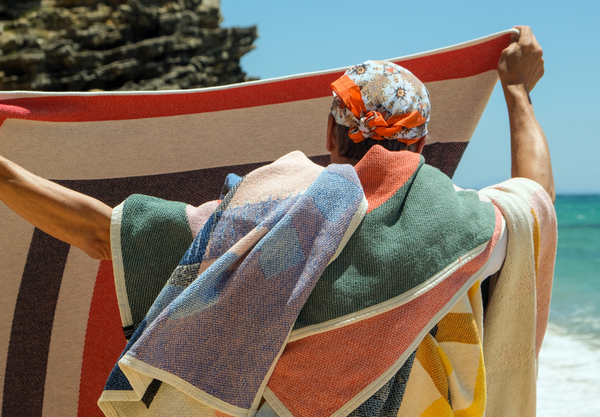
A cotton blanket can serve as a movable layer for a balcony, picnic or mild evening, but check the product’s intended uses and keep it away from persistent damp, rough surfaces and prolonged weather exposure. The “Balance” page explicitly presents the woven artist blanket for home, garden, beach, pool and picnic use. That does not turn it into a waterproof outdoor textile, so bring it inside after use and care for it as directed.
Choose the blanket you will actually reach for. A woven piece can move between sofa, bed and outdoor occasion while maintaining a clear decorative presence. A knit can provide an adaptable, close drape for indoor comfort. In either case, seasonal flexibility comes from adding or removing layers—not from expecting one cotton construction to manage every temperature.
Define the job. Is the blanket mainly for wrapping, bed layering, sofa styling or portable use?