
loading...

Free shipping for orders above SFr. 39.00

How Bauhaus thinking shaped modern textile design and the way we experience interiors today

Bauhaus and the Modern Textile Movement

Bauhaus and the Modern Textile Movement

Bauhaus and the Modern Textile Movement: How Fabric Became Architecture, Art and Function

Textiles, woven fabrics and graphic patterns that reflect the Bauhaus balance between art and function

Products Used

Textiles, woven fabrics and graphic patterns that reflect the Bauhaus balance between art and function

The Bauhaus movement changed the way we understand design, architecture and everyday objects, but its influence on textiles remains one of its most fascinating legacies. At the Bauhaus school, fabric was no longer seen only as decoration. Weaving became a space for experimentation, where structure, colour, pattern and function could be explored through material. This approach continues to shape the way contemporary textiles are designed today. From woven curtains and textured cushions to graphic blankets and interior fabrics, modern textiles still carry the Bauhaus idea that material should be beautiful, useful and deeply connected to the space around it.

Explore Collections

Bauhaus and the Modern Textile Movement

When Weaving Became a Laboratory for Modern Design

During the early twentieth century, the Bauhaus weaving workshops became places of innovation and artistic research. Designers explored geometry, abstraction and colour not only on paper, but directly through the construction of fabric. Threads, grids, repeats and woven structures became tools for creating rhythm, balance and movement. The result was a new understanding of textiles as objects with both visual and functional power. A fabric could filter light, influence acoustics, divide a room or soften architecture. This was a radical shift: textiles were no longer treated as secondary decoration, but as active elements in the design of modern living spaces.

The Bauhaus Legacy in Contemporary Textile Design

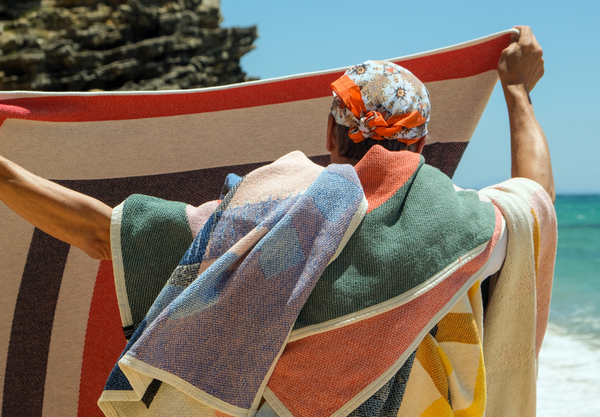
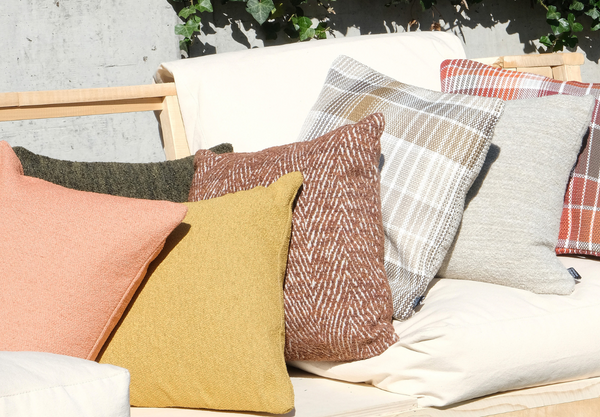
The influence of Bauhaus can still be felt in contemporary textile design. Many modern fabrics follow the same principles of clarity, structure and purpose. Patterns are often simplified, colours are chosen with intention and materials are selected for both their visual and practical qualities. This balance between art and function is especially relevant in interiors, where textiles do more than add softness. They shape atmosphere, define zones and create emotional depth. A curtain, blanket, rug or cushion can bring graphic strength into a room while also adding comfort and tactility. In this sense, Bauhaus thinking remains highly modern: design should be visually strong, materially honest and useful in everyday life.

The Bauhaus Legacy in Contemporary Textile Design
Nathalie Du Pasquier & George Sowden

Nathalie Du Pasquier & George Sowden

A Contemporary Textile Perspective on Bauhaus Principles

Explore artist

FROM THIS ARTIST / ZZ RECOMMENDATIONS

Bauhaus and the Modern Textile Movement Bauhaus and the Modern Textile Movement

Why Bauhaus Textile Thinking Still Feels Relevant in Contemporary Interiors

The legacy of Bauhaus reminds us that textiles are not simply surfaces placed inside a room. They are part of how we experience space. A fabric can change the way light enters an interior, how a wall feels, how a sofa is perceived or how a room responds to sound and movement. This understanding is still deeply relevant today, especially in contemporary interiors where softness, structure and material honesty are essential. Bauhaus introduced a way of thinking in which function and beauty were not opposites, but partners. A textile could be practical and poetic at the same time. It could serve a purpose while also creating emotion, rhythm and visual clarity. This is why the Bauhaus textile movement continues to inspire modern design. Its influence can be seen in graphic patterns, thoughtful material choices, balanced colour palettes and fabrics that feel both artistic and useful. For ZigZagZurich, this approach connects naturally to the idea that textiles are more than accessories. They are expressive design elements that shape atmosphere, bring art into daily life and transform interiors through colour, texture and form.

YOUR CART IS EMPTY