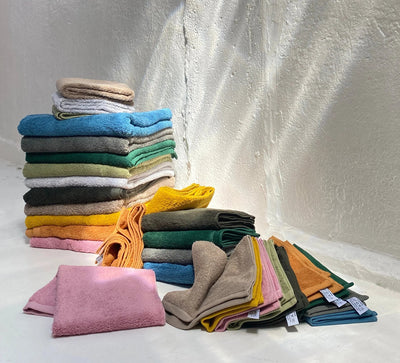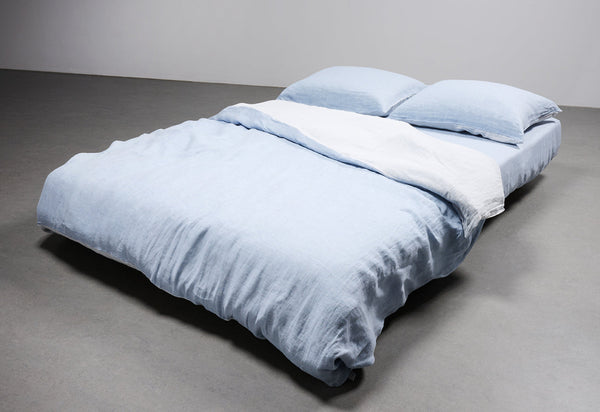























Good organic towel care is less about adding special products and more about protecting the qualities a towel needs to work: open cotton loops, effective rinsing, room to move in the machine and complete drying between uses. Too much detergent, an overloaded drum or a damp pile on the floor can work against softness and absorbency even when the cotton itself is excellent.
The first rule for how to wash organic cotton towels is to read the sewn-in care label. “Organic cotton” identifies the fibre and how it was grown; it does not establish one wash temperature or drying method for every finished towel. Dyes, yarns, hems, weights and manufacturing finishes differ. Follow the towel label, the detergent directions and the washing-machine manual together.
Organic cotton towels are still cotton textiles. They need enough detergent to suspend body oils and soil, enough water and movement for the selected cycle, a proper rinse and thorough drying. The aim is not to avoid washing but to wash accurately. Under-dosing may leave soil behind; over-dosing can make rinsing more difficult. A fixed capful cannot suit every machine, load size, water hardness and detergent concentration.
The ZigZagZurich organic towel collection is woven in Portugal from long-staple organic cotton. The product pages describe long, extra-combed loops and a substantial 700 GSM terry construction. Those loops create the plush hand and water-contacting surface, so care should preserve their openness rather than coat, crush or repeatedly overheat them.
Check the label before using or laundering a new towel. If it instructs you to wash before first use, follow the stated cycle. Remove packaging and detachable items, but do not cut the permanent care label. Inspect the towel for pulled loops, marks or damage so that a product issue is not confused with later laundry wear.
New cotton towels can release some loose surface fibres during early washes. This linting is not automatically a defect and often decreases as loose fibres are removed. Clean the appliance filter or lint screen as directed by its manufacturer, and avoid washing the new towel with clothing that readily attracts lint.
Colour transfer is also most likely to be noticed in early cycles. Sort light, medium and dark colours according to their labels and your normal laundry practice. Do not assume that an OEKO-TEX® certification or an organic fibre claim means every dye can be washed with whites.